TC Surfski Immersion Weekend 2015

This weekend was the third annual TC Surfski Immersion Weekend. I went last year and learned a whole bunch and a had a bunch of fun, so I of course signed up to do it again. The weekend takes place at the awesomely beautiful Hilltop Log Lodge which just coincidentally is next door to the home of the proprietor of TC Surfski, Nick Murray.

Unfortunately Suttons Bay Michigan is a heck of a long drive away, so I missed the introductory paddle Thursday night. We actually saw them out in their skis not too far from the launch site as we were just about to turn in to hilltop trail. If I hadn’t been so tired from nine hours of driving, I would have left Vicki to the settling in and unpacking and tried to rush down to the launch site to catch them. But I didn’t. 

After they came back, I got reintroduced to the returning instructors, a few returning participants, and a whole bunch of new people. And being me, I promptly forgot just about everybody’s names. Sorry everybody. But there was a wide range of experiences including a lot of beginners who have never paddled a Surfski before. The only non-paddling spouse other than Vicki was Eric Haas’s wife Melissa. Eric came last year, but without his wife. I’m happy she came because she and Vicki seemed to have a good time together when we were off paddling.

I won’t attempt any physical descriptions because I heard through a mutual friend that Eric Borgnes took some good natured objection to the way I’d described him last year. At least I hope it was good natured.

Friday morning dawned foggy and not particularly warm. We headed to nearby Cedar Lake for a concentration on technique. We did mostly modified versions  of Oscar’s drills including one I didn’t like much because you had to release the lower hand to do a top hand spear, then re-grab with the lower hand to pull. That threw me completely off each time. 

I got told a few things I already knew and have to consciously think about every time I paddle, like making sure I get the paddle fully in the water before starting to pull, and sitting up straighter. They also found a few things I didn’t know about – I’ve been paddling with my paddle length set to 217cm, but Rob has a wider “wing span” than I and he paddles with 212cm and suggested I do the same, and shorten to 210 in rough water. He also suggested I lower my knees (by adjusting the foot plate forward) in rough water at least until I get more confident. Because I’m one of the more experienced paddlers there other than the instructors, I also spent some time trying to give tips to some of the other participants, but I’m not a teacher so basically I’d just give them a suggestion or two and paddle off looking for my next victim. 

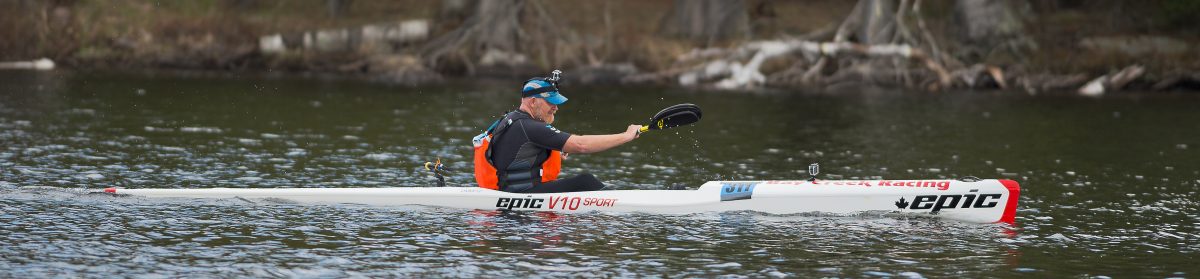
In the afternoon we returned to Cedar Lake for the safety session. Adding a safety session is a good idea in general, and last year’s Sunday downwinder showed the need for it when one of the beginners fell in and couldn’t remount. We’d been warned to dress for full immersion in cold water, and while Cedar Lake is shallower and warmer than Lake Michigan, it still wasn’t warm. We did a bunch of remounts. Not exactly a new thing for me, but a good thing to practice every now and then and especially to practice on your non-preferred side. We did some other exercises that I found enlightening. In one we attempted to paddle with the ski leaned over as far as you could. As I paddled along with water coming into the cockpit, I gained a new respect for just how much final stability the V10 Sport really has.

That evening, Vicki and I and Eric H and Melissa went out for a nice dinner at the 9 Bean Rows restaurant in Suttons Bay. It was really nice except we’d sat outside and everything was sticky from tree sap. Also Vicki was a little mean to Eric about his hypermiling obsession – but since Melissa was just as vocal about it, it think it was taken in the good natured way it was intended.

Saturday morning there was a race in Traverse City. It seems it was just a coincidence that it was put on the same weekend as our camp, but it worked out nicely. Besides our lot in the surfskis there was at least one other guy in a Fenn surfski, a few kayaks and a whole bunch of SUPs. Because last year the Surfski race had been over so quickly, this year he made it longer, with a squarish course to test our abilities. On the first leg, it very quickly settled into a lead pack of Eric Borgnes and Rob Hartman, then the guy in the Fenn with Greg on his tail and Nick and his son in a tandem ski paddling off to one side (well, Nick was paddling, his son’s paddle rarely left the horizontal). I buried myself trying to get on Greg’s stern wake, but never got closer than about 2 boat lengths and eventually gave up and settled down into my pace. There was a very small swell coming down the bay from my front left but it wasn’t a factor. At the first bouy turn, however, the transition from front left to directly astern caused me a missed stroke. I snuck a very quick peek behind and Eric Haas was not far behind. By that point Nick and his son had joined the second pack. The first half of that leg was assisted by the swell, now directly behind, but as we got closer to the break wall reflections off it became more dominant. Both packs ahead seemed to be angling off towards the wall rather than heading directly to the turn bouy – not sure if they were intending to use the wall for shelter or to use the reflected waves somehow or what. The turn took us parallel to the shore. Both packs ahead went to the right of the direct line to find deeper water and stay away from a bunch of bouys marking a swimming area, and I followed suit. I didn’t think Eric was gaining on me, but I used that as a reason to keep the pace up and not slack off. The next turn was directly back into the swell from the top of the bay and numerous boat anchorages with anchor lines to avoid. Just as I passed the “tall ship” and was about to turn towards shore, a largish boat wake came along so I paddled beyond the direct line and turned after it had abated. The posted times were about two minutes slower than my GPS, but I evidently came in a minute and a half behind Nick and his son, and about 1:40 ahead of Eric Haas. Not counting the guy in the Fenn because he wasn’t part of our group, that means I was slower than all the instructors and faster than all the other Immersion participants. Although one of our number ended up with a prize because his V6 had been classed as a kayak rather than a ski.

Saturday afternoon we headed to another local lake. This time it was to find a friend of Nick’s who owned a ski boat so people could practice catching the waves behind it. This is nothing new to me, but it’s always fun. What they attempted to do was to line up four people at a time in the stern wakes and slowly increase the boat speed. What I noticed after the second one is that most people can’t stay on the wake after it gets up to any speed, so rather than wait for my turn I would line up outside the group, and get on the bow wake. The bow wake is harder to ride, and I would have water constantly pouring into the cockpit – good thing the epic bailer is quite effective. But once several of the group had fallen off the stern wake, I’d cut over and ride that. I ended up getting several good rides, and they indulged me with some nice fast ones. I believe I sustained over 15 km/hr a few times. 

Then on the way back to the cars I found myself up front with Eric H. I encouraged him to ride my stern wake because that’s a good skill to have for racing and one you don’t get to practice often unless you have an awesome paddle group like we do here in Rochester. After paddling about two kilometers, we suddenly realized that nobody was exactly sure where the put-in was. Fortunately I have the track map enabled on my GPS so I switched to the map view and could see that the it was about a kilometer further on and to the right. So I surged on ahead – I’m not sure I adequately conveyed that I now knew with complete confidence where the put-in was because Eric and a few others who had been with us suddenly seemed well behind me. But sure enough, the GPS track indicated a turn to the right just as a power boat came out of the bay, and there was the boat ramp right ahead of me.

That evening, the same group of four headed back to Suttons Bay. This time we ended up at a restaurant called “Martha’s”. It was utterly amazing. Possibly the best meal I’ve had all year, if a tiny bit expensive. And both the chef and the owner came out to chat after the meal. Vicki promised to put in a glowing review in TripAdvisor, which Martha seemed happy about.

Sunday morning a few people talked about going for a short early paddle – last year we’d had a ripping down winder which had been a highlight of the weekend for me, but this year there was no wind and I just couldn’t muster up the energy for a flat water paddle after the long day Saturday. So we packed up and hit the road. Uncharacteristicly, I’d added a tie down strap to the normal bungees I used to hold down my ski, and a few hours later near the Canadian border I was extremely glad I had. The wind was so strong that in spite of the one tie down, my boat was shifting around in the rack and I ended up pulling into a lay by to add another strap. Other than the wind, it was a pretty uneventful drive home, just exceedingly tiring.

So what is the verdict? Last year it was easy to be extremely positive about the whole thing because I learned so much and we had that great down winder on the last day. This time I feel like I didn’t learn as much, and we didn’t have a down winder, but I still think it’s a positive experience. There is something magical about hanging out with a bunch of other enthusiastic Surfski paddlers, both experienced and inexperienced. And it really is a beautiful setting.

I’m worried

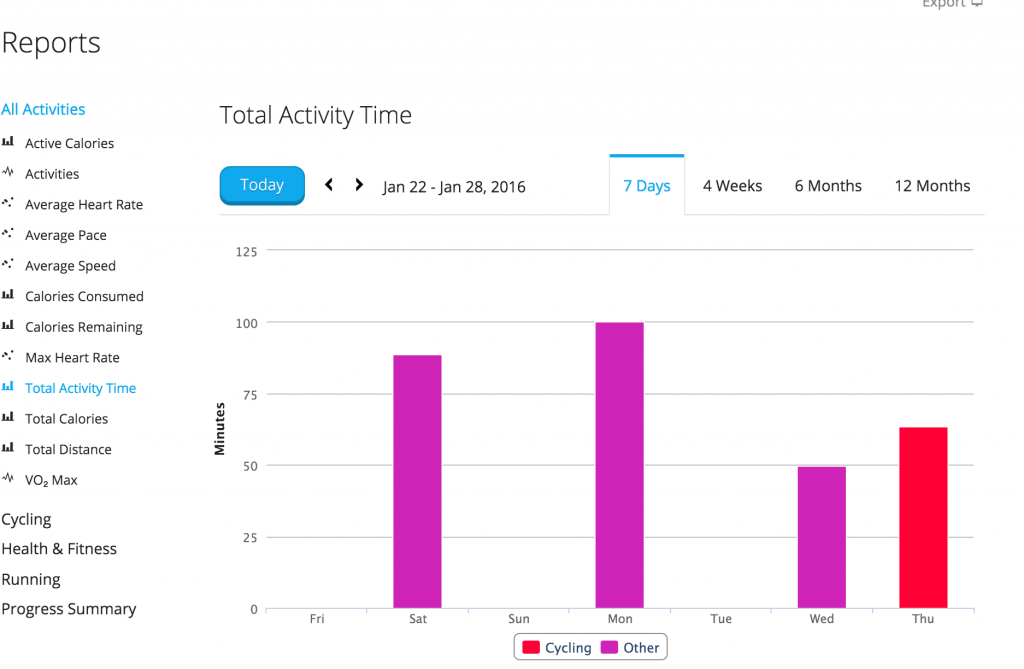
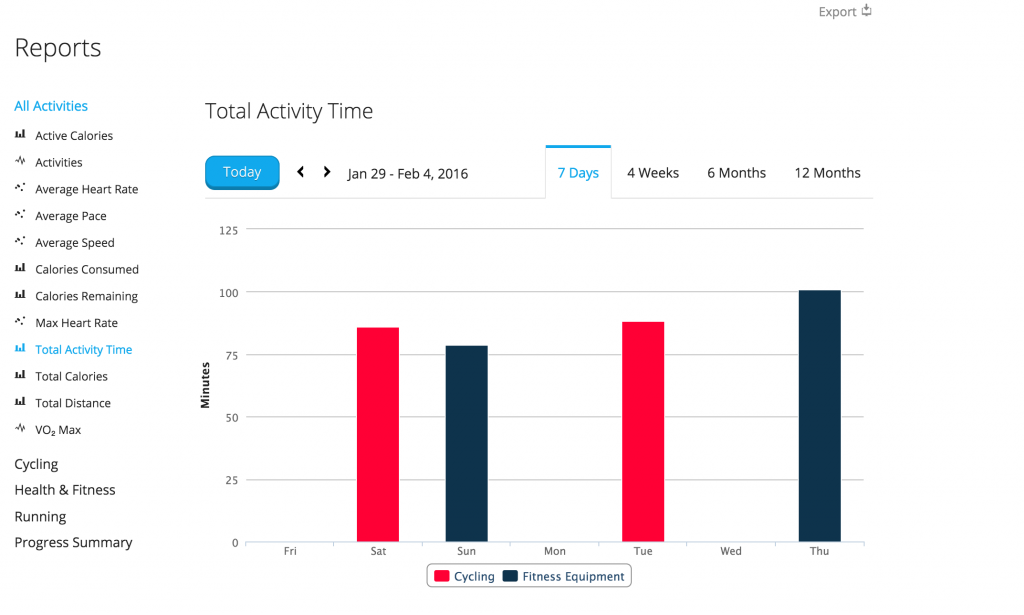
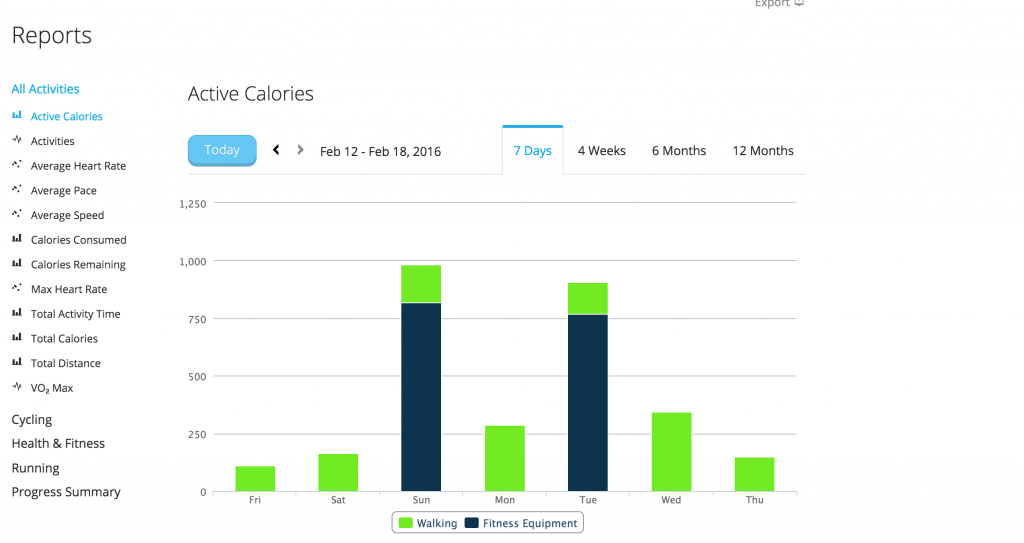
The first race of the season is in two days, and I have to admit I’m worried. On the surface, I probably shouldn’t be – I’ve put in a ton of training this season. According to Garmin Connect, I’ve done 335.3km in my Thunderbolt, 75.3km in the V12, and 16.7km in my favourite boat, the V10 Sport Ultra.

But one of the things that worries me is that I’ve done most of that training cruising along with a heart rate around 120 or so. Even in interval training, I’ve almost never exceeded 150 bpm. In races in the past, I’ve *averaged* over 150 bpm. How will I be able to keep my heart rate over 160bpm for 90+ minutes if I’ve never had it that high for even 8 minutes? Does that mean I should shoot for a lower heart rate this time? What heart rate should I shoot for?

Another thing that worries me is that my shoulder started to hurt a week or two ago, and it hasn’t been getting any better. And yes, it’s the same shoulder that’s had two surgeries, each of which cost me a year off paddling and then another year of trying to recover my form (basically no races between Sept 2010 and Sept 2013). I’ve been trying to take it a bit easier this week and stretch more and take something for the pain, and it’s a little better, but what if I completely blow it at this race? What if I blow it so bad I have to stop racing? What if I don’t blow it, but it never recovers completely? Will I have incentive to keep fit and paddle with my friends if I can’t race?

Another thing that worries me is that I never sleep well before a race, and due to scheduling problems we’re probably not even going to get to the place we’re sleeping that night until after my usual bed time. Knowing me, the slight shortening of my sleep time will be minuscule compared to how much sleep I’ll lose obsessing over my lack of sleep. One of the first books I read about competitive cross country skiing said that lack of sleep before a race is normal, and the trick is to make sure your muscles aren’t tired by holding very still when you can’t sleep, so you’ll show up at the start with a fried brain but rested muscles with is better than fried muscles and fried brain. I’m not sure if that is really what the author intended, or if making you hold still instead of tossing and turning is just a good strategy to make you fall asleep. But I’ve tried to practice it whenever I race.

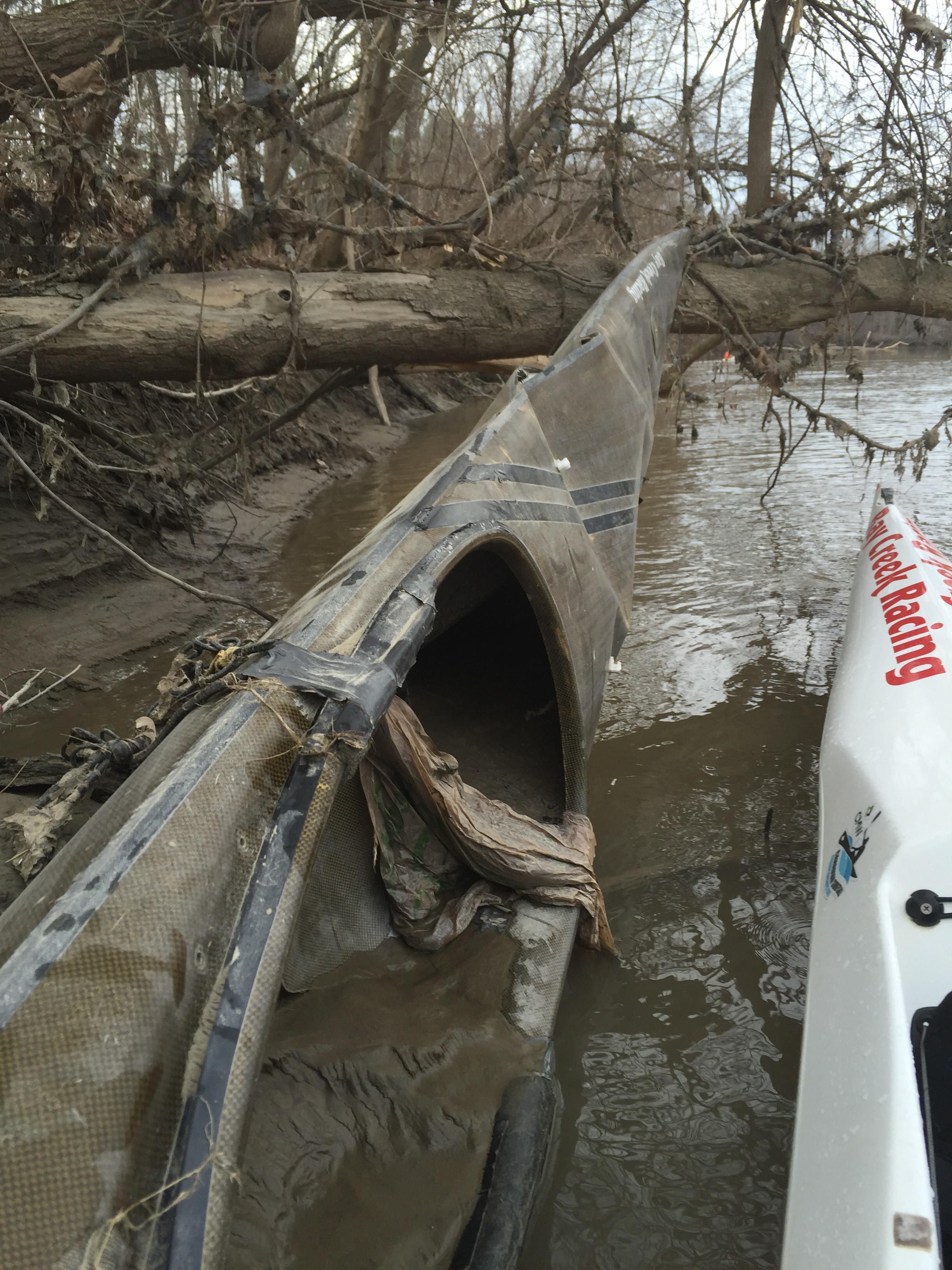
I’m going to race my Thunderbolt this weekend. The Thunderbolt is old, it’s beat up to shit, and I just had to put a big strip of fiberglass under the seat because the seat was wearing through the outer skin. And it looks like this is the second time it’s been patched there. The foam “beams” that are supposed to keep the back from flexing too much are broken. Also one of the screws that holds in the seat wears a hole in my hip. I’m much rather use my V10 Sport for this race, but it has some shallow water so an overstern rudder is a bit of a plus, and it has a portage – last year I slipped on the muddy hillside and dropped my boat. If I’d been carrying my V10 Sport instead of the Thunderbolt, I probably would have put a hole in it. That Thunderbolt is a tank. I’d love to buy a new one (and Roger Gocking has a new one for sale that he’s barely paddled) but since I basically stop paddling it after this race every year, I can’t really justify it to myself. Actually I’m kind of hoping that I’ll get good enough at paddling the V12 that I can use it next year, because it’s got an overstern rudder and it’s Performance layup so it’s more robust than the V10 Sport’s Ultra layup.

I guess my strategy this race will be to go out at a more moderate pace than usual, monitor both my heart rate and the condition of my shoulder, and if I feel up to it, increase the pace after a while. And hope that nothing horrible happens.

Damn DMARC

So a couple of weeks or months ago, I noticed something odd with the mailing lists I run. People on Yahoo and AOL claimed that they were missing messages, and Gmail was stuffing mailing list messages from people on Yahoo or AOL into the Spam folder, even though I’d received literally hundreds of messages from those people on those mailing lists in the past.

After investigating, it turns out that both Yahoo and AOL had turned on an anti-spam feature called “DMARC”. Basically what it meant if a message came with a From line saying it was from either of those, but not coming from an approved mail sender, they were asking the rest of the net to treat it as spam. Gmail honored the DMARC request by putting it in the Spam folder, but Yahoo and AOL and some other ISPs were just bouncing the messages or throwing them away.

This DMARC was obviously a huge problem for mailing lists, because what they do is they accept an email from a person, and then send out the message to all the members of the mailing list, and most of them use the person’s email address in the From line of the mailing list message. This breaks under DMARC, because if my mailing list server recieved an email from joe.blow@yahoo and sends out a message to the mailing list members with a From: joe.blow@yahoo, then all those mail servers that implement DMARC are going to see that I’m not designated by yahoo as a valid sender of yahoo email, and they’re going to drop it.

The developers of the Mailman mailing list software were quick to offer some solutions. First they issued 2.1.16, which had a quick and dirty work-around, and then they rolled out 2.1.18, which had what I think is a much better solution. But my problem is that my mailing list server is pure Debian Stable, and I want to only install packages, not get into the hassle of installing things from source and then having to monitor if things are updated. So I waited for 2.1.18 to get backported to Debian Stable (which uses 2.1.15). I put in request tickets to get it backported. They never did. Instead, they made it a package in Debian Testing, which is less stable.

So I did some googling and discovered something called “apt pinning” that would allow me to install some Debian Testing packages on my Debian Stable system. I tried it, and it wanted to drag in a new version of python, which wanted to drag in a new version of libc, and so on. That’s just stupid – the minimum required python for 2.1.18 is exactly the same as the minimum required python for 2.1.15. Whoever set up the .deb was a little over zealous in the requirements section.

I did not particularly want to drag in unstable versions of the very core libraries of a Linux system for no reason, so my next possibility was to install it from source. That was more complicated than it should have been, but relatively painless. First I tried following the instructions that Bill Bradford pointed me at. Unfortunately, immediately it told me that “Distutils is not available or is incomplete for /usr/bin/python” and “be sure to install the -devel package”. Well, unfortunately there isn’t a “python-devel” package. I looked at the script that configure was using to determine what it was looking for, and the problem was a missing Python.h in /usr/include/python2.7/. A bit of searching, and I discovered that this was installed by a package called “python2.7-dev” – so close, but so far from the “python-devel” I had been searching for. After that, I discovered I had to install the “make” program (like I said, this was a pure server system and I hadn’t been building software on it before) and I did my “make install”. Mail seemed to flow, but I couldn’t access the web interface. Bill suggested running the “check_perms -f”, which found and fixed 26 permissions problems, but still things weren’t working. I compared the perms on a few directories between this installation and my last backup, and discovered that neither the installation program nor check_perms had noticed that the cgi-scripts in the /usr/lib/cgi-bin/mailman directory were setgid “root” instead of setgid “list”. I fixed that, and everything started to work.

Now I wanted to test whether the new “dmarc_moderation_action” setting that 2.1.18 provided would actually fix the problem. So I changed the setting on one of my mailing lists, and emailed a guy on yahoo who was on the mailing list to see if he could test it for me. Unfortunately he wasn’t around, so the next morning I bit the bullet and created a yahoo mail account and added it to that list. I tried a post by this user to the list, and it did the right thing (changed the From address to the list address, but used the Yahoo’s person name part in the person name part), and testing that gmail didn’t stuff it in the Spam folder. I made sure it doesn’t do that with non-DMARC addresses like gmail. And then I made that setting change to all my lists.

Finger crossed, and hope that there aren’t too many more updates I have to apply before a 2.1.18 or later Mailman shows up in Debian Stable.

My other kayak

Last year I found this Think Legend surf ski on Craigslist. Poor guy had bought it because he wanted a fast kayak and didn’t realize there is a skill progression required. I’m almost a good enough paddler to manage it. Last year I paddled it a lot, trying to master it. But this year I’ve hardly touched it. You see, last year my other surf ski was a ancient V10 Sport in club layup, so the fact that the Legend was their cheap layup and was heavy as hell didn’t bother me. After all, it was narrower and longer than the V10 Sport so I knew if I ever mastered it I’d be faster in it. And by the end of the year I could handle it in a straight line and on flat water. I used it in a couple of races on the canal and did ok with it.

But this year I’ve had a change of plans. I got a V10 Sport in ultra layout, and it’s so light it makes the weight of the Legend seem like paddling a brick. A tippy unstable brick. Plus I’ve become really enamored of paddling on the lake, with all the waves and boat wakes and other stuff I used to hate. Plus I signed up for the Lighthouse to Lighthouse (L2L) race, my first ocean race, and I’m committed to paddling the Blackburn Challenge next year. So I’ve been all about the V10 Sport this year and neglecting the Legend.

But I did do a bit of a time trial one against the other on the canal and it appears that the Legend might be a tiny bit faster on the flat. And when I’ve hit a bit of a wake, it seems like the Legend has the potential to be really fast in the surf. If only I could keep it upright. If and when that day happens, I’m seriously thinking of getting a light high performance boat, either another Think Legend (if I can find one) or a V12 or whatever turns up on the used market.

I paddle the Legend one night a week – Mike and I call it “tippy boat night”. I guess after l2L I should up that to two or three times a week. Unfortunately last time I dropped it on the dock, putting a rather deep looking crack in it. It’s probably repairable, but I fear it will be a bad idea it paddle it until it’s fixed. Plus the patch will make my heavy boat even heavier. So I guess no tippy boat night until it’s fixed.

Lots and lots and lots of paddling

Remember how when I first started paddling I used to blog about every workout? These days, I don’t bother. I paddle 5 times a week, and there would just be no way to keep up with that. Also, I’m starting to pile on the miles (kilometers) in preparation for the Lighthouse To Lighthouse race in a couple of weeks. The race is 14 miles (22.5 km) and it’s on Long Island Sound, which isn’t the open ocean but it’s likely to be quite different that what I’m used to. So every weekend and some Tuesdays you’ll find me and Mike F out grinding out long paddles on Lake Ontario.

I looked at my stats, and 2010, the year before my surgery, I did 18 paddles of longer than 15 km. So far this year, I’ve done 27. All but one of my paddles over 20 km have been in the last month or so. Case in point, today we did 25 km.

Several of our paddles recently have been battling boat wakes from every direction at once, which is probably good practice but it’s no fun at all. Today we got a really early start (7:30) to try and avoid the boat wakes. We probably needn’t have bothered – the lake “turned over” early this week and the skies were overcast and grey. There was a wicked wind from the south, which is no help at all, and a low amplitude long period swell coming from the north west, which we hoped would provide a bit of help on the way back.

We set off towards the west, keeping tight into shore to avoid the south wind. It was a bit of a balancing act, trying to keep out of the slow shallow water but remain mostly in the wind shadow at shore. Sometimes it didn’t work. One advantage of staying in close was we got to see more scenery – people out walking their dogs on the beach, people taking their morning coffee on their decks, and in one place, 11 deer, including babies with their white spots, coming down to the shore to drink. We paddled a bit slower than usual, and Mike and I paddled beside each other instead of him riding my wake as is often the case. My heart rate was ticking over in the low 110s mostly, which is lower than I’d like, but to go harder would mean losing Mike’s company.

Right smack dab in the middle of the trip in each direction we had to swing away from the shelter of shore to clear the end of the break wall at the river. This is a dicey spot – you’ve got the waves and wind from the south, the swell from the north west, and all sorts of reflections of both of those. However this time, because we left early and because the conditions weren’t optimal for pleasure boats, we didn’t have the usual confusing maelstrom of boat wakes on top of it. It wasn’t too difficult, but even so my heart rate went over 130.

As usual on these paddles, I normally just keep heading out until Mike suggests we turn back. Usually he does it just after I’ve decided “ok, at the next kilometer/point/whatever, I’m going to suggest we turn back”, but it’s good for my ego to make it look like it was his idea. This time it was just seconds after my GPS beeped at the 12 km point – I was going to tough it out to 12.5 or 13, but that’s good too.

As we turned, we did our homage to Oscar Chalupski and shortened our paddles. I wanted to get a bit higher heart rate, so I increased my speed and started towing Mike in my stern wake. That worked out pretty well – with a little assistance from the north west swell at my back, I was nearly 1.5 km/hr faster than on the way out. And all was well until once again we had to leave the wind shadow of the shore to swing around the river break wall. The wind blown off shore waves were bigger, and now it seems like every sailboat at the Rochester Yacht Club is heading out to the lake. Mike lost his place on my wake and started falling behind. Now I’m faced with trying to navigate this mess, but also trying not get so far ahead that I can’t check in Mike and possibly circle back if he needs help. But I don’t want to slow down, so I quickly cross the river and head directly into the wind, then circle back to Mike as he gets about half way between the end of the break wall and shore.

After we get back in the wind shadow, it’s clear that Mike is spent. He can’t even stay on my wake anymore. I don’t want to slow down, so what I start doing is paddling ahead until my GPS beeps for another kilometer mark, then circling back around Mike. That’s literally circling – I don’t have to paddle in the reverse direction, just turn 360 degrees. And even then it usually takes me to about 400 meters or more before I catch and pass Mike. It probably would have been better for Mike, who was clearly suffering, if I’d slowed down and given him a wake he could hold, but out on the water I was only thinking of my training needs and I wanted to know I could still increase my speed at will.

The circling increased my total distance – we’d turned back at almost exactly 12 km, but I finished at 24.9 km. and afterwards I still had enough energy to carry Mike’s boat back to his car for him.