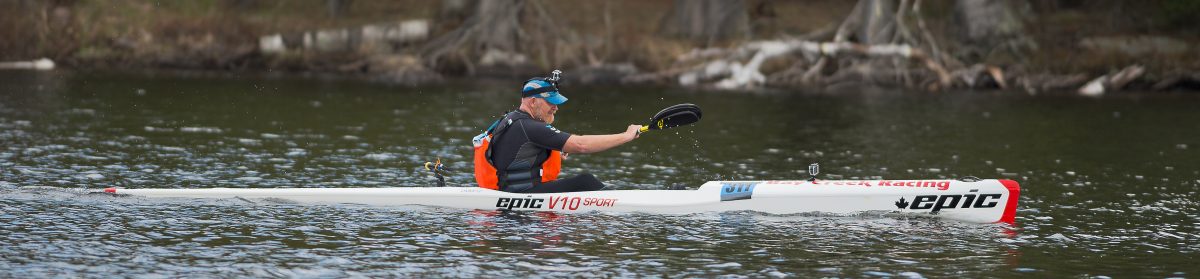
This time of year, I’m majorly enthralled by the Tour de France. I’m going to presume to explain a few things about professional cycle racing even though I’ve only been following it avidly for 7 years now (and a little less avidly back when one of the riders in the peleton was a guy I’d shared tips on preventing penile frostbite with). Some of this might be laughably wrong to people who are really into the sport, but it should be close enough for the rest of you.
Continue reading “A tale of two super domestiques”
Category: Activities
Drool
Garmin 396 GPS with XM Weather (Americas) – Sporty’s Pilot Shop
When the Garmin 296 came out, I said that all it really needed was XM Satellite weather and approach plates, and it would be the perfect electronic flight bag (EFB). Since EFBs start at about $4,000, they are so far out of my reach as to be laughable. But now they’ve done it – they’ve combined the Garmin 296 with built-in XM Satellite weather (and you can listen to XM Satellite stations with an audio jack on the unit), and it’s just about perfect.
I seriously wish I flew enough to justify this beast. But since all I really do is a few 2 hour flights every month, I should probably just keep drooling and keep the credit cards locked away.
Anecdotes from the Tour
Watching the Tour de France coverage the other day, a couple of riders were accidentally shown by the cameras on a “natural break” (normally they show something else when the riders stop to take care of the biological necessities), and Phil Ligget was talking about how the riders won’t attack when a rival is taking a “natural break”. Paul Sherwin said that when he was riding, there was one rider who frequently attacked at those situations, so one day when he was off his bike for a break, the other riders stole his bike and pushed it a few kilometers up the road before abandoning it in a ditch. The rider had to wait for his team car to give him a spare bike, and maybe learnt a bit of a lesson about pay-back.
Then Phil told a story about when he was racing, and there was a guy who used to sprint on ahead until he was out of sight of the peleton, and then he’d hide and wait, and rejoin the peleton, and then enjoy being sucked along as the peleton tried to chase down this break that they couldn’t seem to catch sight of. He said this would continue for a few minutes until somebody recognized him in the back of the peleton. I guess this was before the days of race radios.
Just a couple of amusing anecdotes to while away the days before the race begins in earnest, with the first mountain stage on Saturday.
It’s nice to see Lance in yellow again, though.
I have a theory about this year’s race. The two time trials in the early flat stages of the race make it seem like it was designed to make Lance and his team have to get yellow earlier than they like and force them to defend it. And then the fact that both Saturday and Sunday’s mountain stages have long downhills to the finish means that no matter what Lance does in the mountains, the other “big men” will have a chance to catch him back up for the finish. I think Tuesday stage with two 1st category climbs and a mountain top finish will be the one that really shows whether this is Lance Armstrong’s tour again.
Weekend Update
Another great Canada Day weekend in Ottawa. We wandered around in the crowds, saw some busker shows, watched boats go through the locks, paid way to much for lousy “Canada Day Special Menu” meals at restaurants and saw the fireworks. I loved every minute of it. Sunday for a change of pace we took a canal tour boat, something I never felt the need for when I lived there. It wasn’t all that exciting, but the tour guide was pretty funny.
The flight back was good too. Same problem with the push to talk switches as we had on the way out, and I forgot to have Vicki fill out the customs form while we were flying so the customs people had to poke around the plane and ask for all the paperwork (and I forgot where the registration is stored on the Lance, so that took a bit of time to find).
Nice flight up.
Vicki and I flew up to Ottawa today in the Lance. The plane was a bugger to get started, and at first we had a problem where the push to talk (PTT) on my yoke and that on the hand mike refused to work, so we cross threaded the headsets and I pushed the PTT on her yoke when I wanted to talk. A major pain. A few minutes later I noticed I still had the button pushed down to put comm1 on the overhead speakers. I turned that off and suddenly my PTT started working again. I’m not sure what the connection is, but it was good to get rid of the criss-crossed wires and the hassle of reaching over every time I had to talk.
The Lance climbs like a slow dog in hot weather, so I took off with the gear override on and two notches of flaps. That made a huge difference.
Rochester was very hazy, reporting 3 miles visibility, with few clouds at 500 feet and a scattered layer at 5000. I said to Vicki “it will get clear as soon as we’re above that scattered layer at 5000”. Actually by the time we got above the layer, it was more like 6000 feet, but it was clear, cool and very smooth up there. We levelled off at 9000 feet around the KONDO intersection. We could see a “wiffle-diff” (a rising plume of cloud punching through the cloud layer) just ahead of us as we turned direct to ART. I guessed it was the steam from the power plant at Oswego. I guess the air below the cloud was so unstable that the moisture from the power plant started rising and kept rising until it hit 9000 feet.
I was a little disconcerted when I was about to reach ART and they hadn’t ammended by clearance to specify the CYRIL.SIX arrival. Usually Wheeler Sack approach does that by then, because the FSS computers won’t take that when I file, but Ottawa insists on it. I called and queried, and he said that it was already on the strip, so he thought I’d already been given the clearance. Good thing I know this route.
There was a weird strip of clear air over the St. Lawrence River. I’ve often seen different weather on each side of the river, but this is the first time I’ve seen the same weather on both sides and different weather just in the narrow confines of the St. Lawrence valley.
After crossing the St. Lawrence, Montreal Center started us down. First we were in and out of the tops of cumulus clouds at 7,000 feet, but as we were getting vectored for the approach it was almost completely solid between 4,000 feet and 3,000 feet. In the infrequent breaks, I could see that at 3,000 feet was only a few hundred feet above the base of the clouds. So as soon as Ottawa Terminal cleared me for the NDB 25 approach, I descended (I still can’t get used to the way they don’t give you an altitude for the approach) down to 2,500 feet and said I’d take the visual.
After I was cleared to land, a Dash-8 reported ready to take off. She probably could have taken off before I got in, since I had my gear down and was slowed down to 90 knots by then, but the controller made her wait. I admit, I still get a feeling of power making 50 people wait for little old me, but I wonder if I should have offered to slow down more to allow them to take off.